Champagne as a wine region dates back centuries and today the prevailing style of Champagne is Brut and consequently the vast majority of Champagne is sent on the market labelled as Brut, but this was by no means the case, when Champagne was first discovered.
Although wine was made in Champagne at least back in the 1st Century A.C., when the Romans reigned over Northern Gaul and what we know today as Champagne, sparkling wine as we know and love it was invented much later, because for centuries and centuries, the fizz was considered a fault.
The problem was, that the cold winters in Champagne would halt the fermentation, meaning that once bottled, an additional fermentation could take place in the bottle and the pressure in the less strong bottles, which were available at that time, could cause the bottles to explode!
Much changed with Dom Pierre Pérignon, who produced the first Blanc de Noirs from black varieties including Pinot Noir. Earlier, Champagne would be rosé, but by removing the skins from the most and thus avoiding to extract colour from the skins, the resulting wine would be white. Also, he did re-introduce the cork stopper into France as well as pioneering the use of English glass bottles, which were stronger than the French ones and therefore better suited for the potential second fermentation in the bottle, a second fermentation which today obviously is the prerequisite for any sparkling wine made by the traditional method.
Even if Dom Pérignon did consider the fizz a wine fault, he did create the méthode champenoise with the second fermentation taking place in the bottle and seems only appropriate to refer to him as the Father of Champagne.
Back in the days of Dom Pérignon, the request was rather for sweet sparkling wines and huge quantities were sent to amongst others the Russian Czar Nikolai.
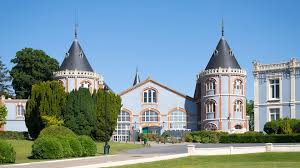
Fast forward to 2024, where Vranken-Pommery ranks as the No. 2 selling group in Champagne, but it remains relatively unknown, that Champagne Pommery was indeed responsible for the creation of the very first Brut Champagne.
Champagne Pommery dates back to 1836 and following the normal procedure of that period in evolution, grapes for Champagne were harvest ‘in the green’, or unripe, as we might call them today. To make up for the lack of ripeness, the wine had added substantial amounts of sugar and the resulting style would be very sweet. Most likely similar to modern day ‘Doux’.
In 1858, Madame Pommery took over after her late husband and if anything, she was always after quality, pushing it to the extreme, and since good wine is above all made in the vineyard, she gradually built a collection of vineyards, including some of the finest vineyards in all of Champagne.
Madame Pommery lived most of her life in England and had excellent connections to as well as informants within the English Court and she had weekly reports sent to her regarding preferences, requests etc., and at some point, the request was, that Champagne was made in a drier style.
Madame Pommery immediately required her grape growers to harvest later to harvest riper grapes, intending to produce a drier style of Champagne and based on these grapes, the first commercially successful Brut Champagne was produced.
It is rather a curiosum, that one and a half century ago, growers struggled to grow ripe grapes, whereas nowadays harvest actually starts a full 18 days earlier on an average compared just 30 years ago. The culprit here is the ongoing climate change. Just consider, that from 1961 to 2020 the average temperature in Champagne has risen by 1.8℃. Picking earlier is done to prevent the much-needed acid from dropping during the continued ripening of the grapes and also to avoid too ripe fruit aromas, which would be a much lesser match for the autolytic aromas derived from the extended lees aging.
Looking at the gastronomic scene and the wine scene anno 2024, imagining a world without Brut or even drier styles of Champagne seems meaningless. Especially, since the preferred style among chefs and top sommeliers seems to lean more and more towards even Extra Brut, meaning a dosage of no more than 6 grams of sugar per liter.
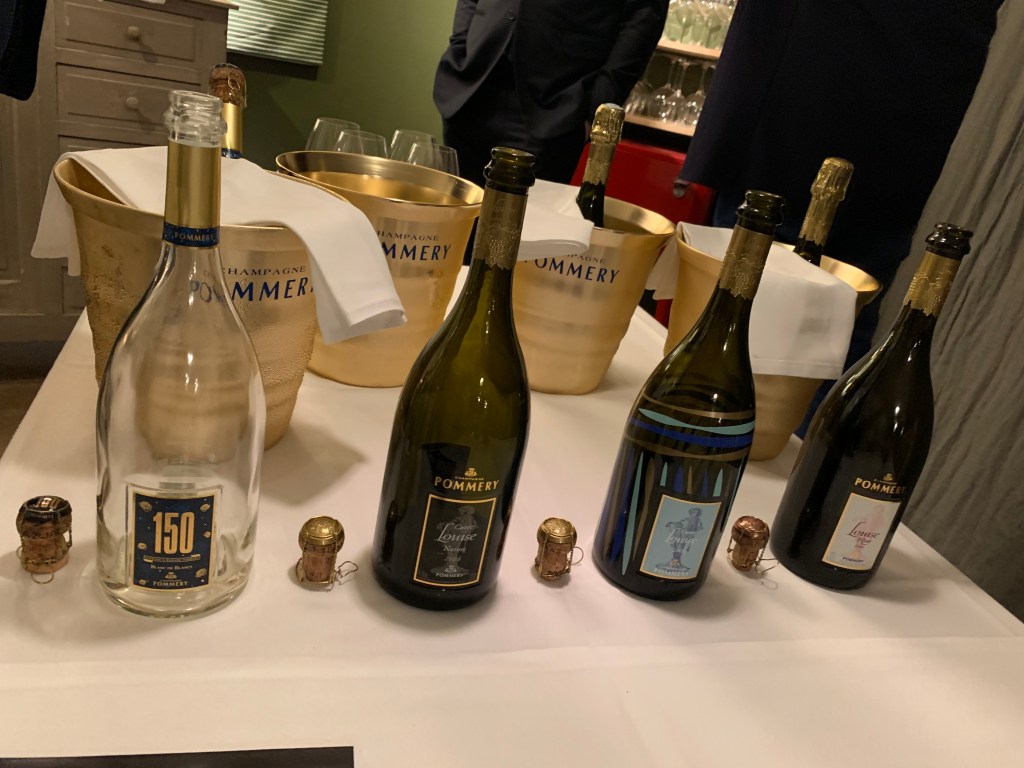
What better way to celebrate the 150th Anniversary of Brut Champagne than by tasting 4 absolutely gorgeous examples from Champagne Pommery:
Cuvée 150 Blanc de Blancs
This cuvée is released to commemorate the very first Brut Champagne made 150 years ago back in 1874.
Grapes are from Grand Cru’s Avize and Cremant and the wine has spent 7 years on the yeast. Aromas of green as well as bruised apple, ripe lemon, brioche and croissant.
Racy, with high acid, as one might expect from a pure Chardonnay Champagne. Flavours of green apple, lemon and lime as well as lovely autolytics. At the same time light, yet highly intense. Let it breathe to allow the bruise apple to come to the front.
6 grams dosage.
For fans of Blanc de Blancs, I highly recommend that you seek out Pommery Apanage Blanc de Blancs.
Cuvée Louise Brut Nature 2006
When Cuvée Louise was first launched in 1979, it was Pommery’s new top cuvée, succeeding the Cuvée Royal. The grapes (60/40 Chardonnay/Pinot Noir) come from Avize and Cramant for the Chardonnay and Aÿ for the Pinot Noir, Aÿ which is said to add additional bisquity aromas to the wine. 10% of the wine spent time in concrete eggs for micro-oxidation to take place.
Here is zero dosage and yet this Champagne is quite approachable, although it remains a bit of a Wine Geek’s wine in a most positive way.
The wine opens oxidative with bruised apple as well as toast, bisquit, brioche and pastry, honey, vanilla custard and butterscotch and perceivable minerality, typical of the 2006 vintage. This is a broad-shouldered Champagne with a distinct mineral touch, that I find most appealing. At 18 years of age, obviously the acid perception is lower, but it remains high in acids.
Cuvée Louise Brut 2006
Even at a modest 6 grams, you feel the dosage, having just tasted the Brut Nature.
It adds to the perception of the fruit, which appears to be riper. Ripe Golden Delicious apple, apple pie and ripe pear. Ripe lemon and lime. Nutty and toasty and the autolytics kick in more on the finish.
The mouthfeel is soft, but the acid is still high and adds freshness to the wine, even at 18 years.
Cuvée Louise Rosé 2004
A 60/40 Chardonnay/Pinot Noir blend from Aÿ, Avize and Cremant with 5% of Pinot Noir red wine from Bouzy added to the cuvée.
A gorgeous Champagne oozing from red currants, strawberry, raspberry and red apples, croissant and peach melba. This is very smooth. Creamy and fleshy, yet has high acidity. Flavours evolve around peach melba, apricot filled pastry, vanilla custard, roasted nuts and almond. This is such a harmonious Champagne and it would be a most fitting finish to most any Champagne tasting.
Cheers or as they would say it in France: Santé!
 LehmannLarsen.com