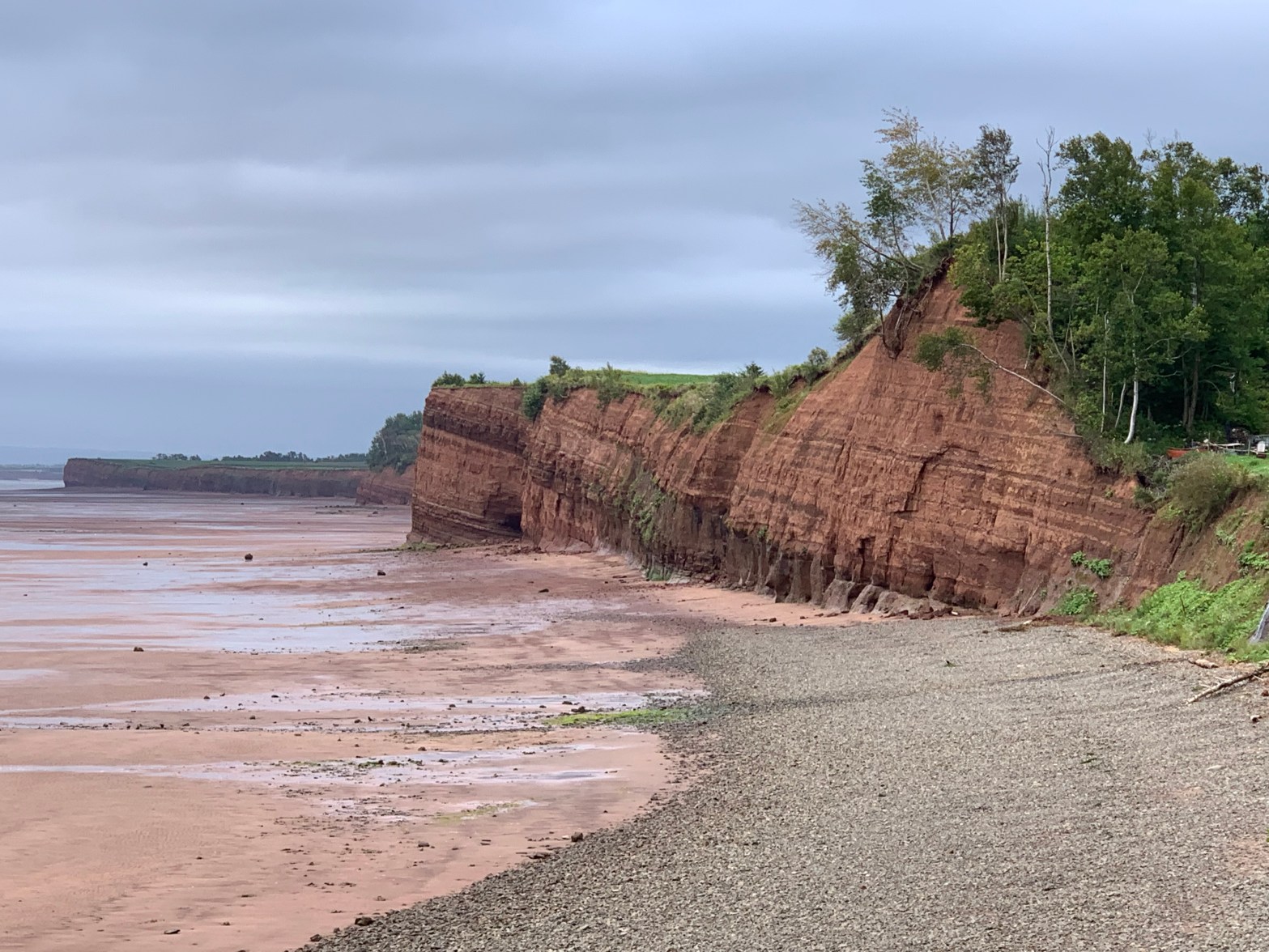
A headline with more truths to it than just one.
Due to the geometric peculiarities of a globe being printed on a rectangular piece of cardboard, when most people think about Canada, they think of a country in the far north and accordingly, people tend to think of Nova Scotia as an extremely northerly location despite its location just a bit farther north than Bordeaux at 45º latitude. The growing conditions, though, is completely different.
The entire province of Nova Scotia is in fact nested in the Atlantic, which brings the moderating effects of the Gulf Stream as well as the highly important climatic factor of the tides.
Bay of Fundy experiences the world’s biggest tidal shifts at as much as 16 meters, shifts which bring in cool summer breezes and leaves large bodies of water unfrozen during winter.
Since vineyards are never more than 20 km away from the ocean, they are able to exploit both factors’ moderating effects on the climate, which is really beneficial for wine growing in Nova Scotia.
Tidal Bay, whose name is obviously inspired by the tidal shifts, this powerful force of nature, is produced from a vast number of varieties and it is Nova Scotia’s vinous claim to fame and just exploring the different Tidal Bays whilst enjoying the local fish and seafood would actually be all the reason, one needs for of a visit.

Nested in a genuine cool climate wine region such as Nova Scotia, it would make sense, if wineries aspired to make amazing sparkling wines, right?
If a producer aspires to make world class sparkling wines with the traditional method, it is only obvious to try to plant the classic grape varieties from Champagne, which are Pinot Noir, Meunier and Chardonnay and these grapes are also popular in Nova Scotia and beautiful wines from these varities are indeed produced in the province.
The climate in Nova Scotia, though, is nothing quite like Champagne!
Think about the Polar Vortex Collapse in February 2023, which saw temperatures dropping to below -25 degrees Celsius…
Such extreme freezing is potentially lethal to Vitis vinifera cultivars, who simply do not have it in them to thrive in such conditions and producers have indeed reported about devastating damages and losses in vineyards planted with Vitis vinifera vines.
So, if you want to produce traditional method sparkling in these extreme climatic conditions, the much more winter hardy hybrids, such as L’Acadie Blanc, offer an interesting way forward and a number of producers have in part turned to L’Acadie Blanc, which does possess fairly neutral aromatics, yet at the same time it definitely comes with plenty of acidity, whilst accumulating moderate amounts of sugar.
Nova Scotia is experiencing big success with hybrid variations and most notably with L’Acadie Blanc and important reason for this is, as in any highly marginal climate, that Vitis vinifera cultivars struggle to fully ripen here. Had the ‘international’ grapes thrived and ripened without any difficulties, I probably wouldn’t be writing this article…
‘Struggling to fully ripen’ implies just ripe aromas and plenty of acidity – perfect for… traditional method sparkling wines, which is what pioneering Nova Scotia producers decided upon to make exactly these features work in their favour.
Extended lees ageing!
In their production of traditional method sparkling wines, Nova Scotia producers have successfully introduced extended periods on the lees and these days, three to four years on the lees is just about average, even for their non-vintage wines.
Extended time on the lees delivers added texture to the wine as well as another level of depth with more obvious autolytic notes (dough, yeast, pastry etc.), which enhances the complexity. Also, the lees contact alleviates the sensation of acidity in the wine.
An acidity that, as Simon Rafuse of Blomidon Estate Winery puts it “… just doesn’t drop here!”

In a world, where climate change has pushed forward the harvest in Champagne by 18 days over the last three decades, resulting in dropping acidity and a rise in potential alcohol by 0.7 per cent, the quality of sparkling wines from Nova Scotia is excellent news to all those of us, who love traditional method sparkling wines.
Recently, L’Acadie Vineyards 2017 Prestige Brut Estate scored 95 points at the 2023 Decanter World Wine Awards and it points to something going on in Nova Scotia, that should be taken notice of. Unfortunately, these wines are small-scale and distribution is very limited.
Come in mind that all of Nova Scotia’s wine production equalled 211,000 cases of 12 bottles or just short of 1.9 million litres of wine (2019) and of those some 50% is Tidal Bay, 20% is red wine and a good portion is devoted to miscellaneous whites, rosé and non-traditional method sparkling wines, so a total of less than 250,000 bottles of traditional method sparkling wine is produced in Nova Scotia.
Consequently, a lot of the wines prove to be very difficult indeed to purchase outside of Canada or even outside of the province. But consumers continue to be drawn towards niche wines, making Nova Scotia traditional method sparkling wines, and maybe those made from L’Acadie Blanc in particular, candidates for being highly regarded, sought-after “cult-like” wines.
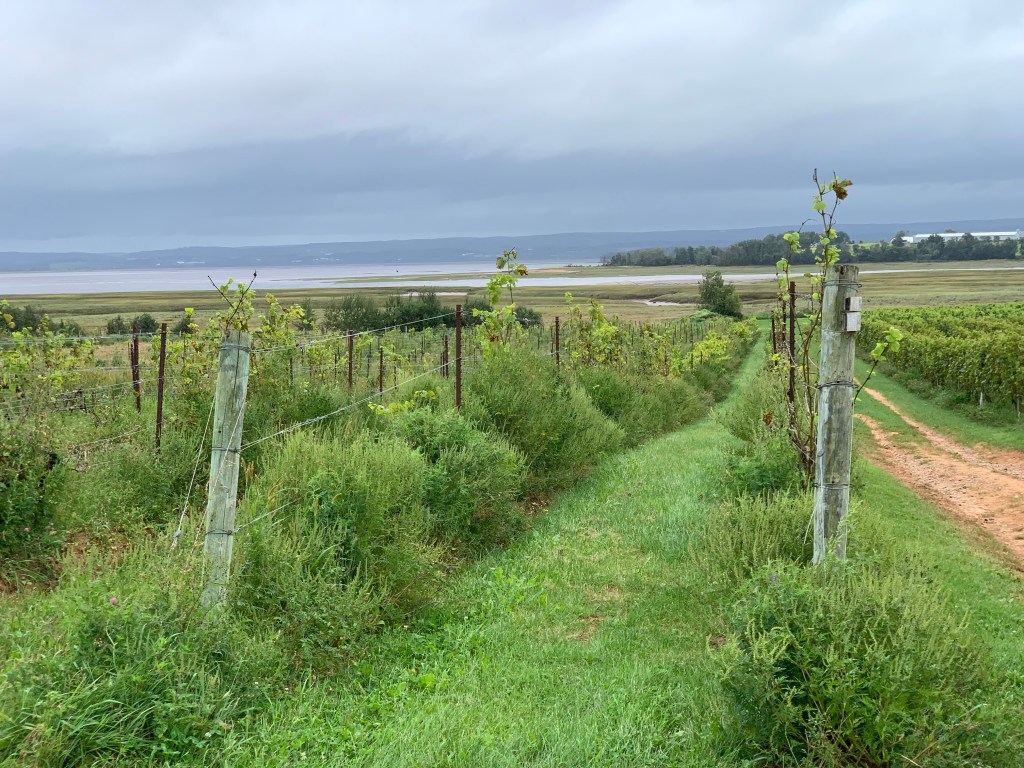
Are these wines really that good?
Oh, yes! Indeed, they are. The best Nova Scotia sparkling wines are absolutely positioned to take on many a good Champagne!
From my experience, comparing the two, Nova Scotia sparkling wines will often have even racier acidity than Champagne, yet they might be even richer.
The combination of added richness and extended lees aging would explain, why producers in Nova Scotia succeed with keeping the dosage pretty low, despite the high acid levels, and the wines still being very much approachable.
It is remarkably, how often dosage is kept at 6 grams/liter or even lower – I have included the dosage for most of the wines below.
Now, on to the wines!
2017 Prestige Brut Estate from L’Acadie Vineyards, a single variety L’Acadie Blanc with 60 months on lees and with 6 grams/liter. Quite subtle toasty brioche, ripe lemon, grapefruit, green apple, and pear. Beautifully balance with such lively acidity even after 5 years of tirage, due to 10,7 grams of acid per liter at harvest, and the wine has very good length.
2020 Vintage Cuvée is 87% L’Acadie Blanc and 13% Seyval Blanc. Less tirage shows in less autolytic notes, which remain somewhat in the back and makes way for bruised apple, apple cider, lemon and grapefruit as well as some tropical fruit like pineapple. A modest 5 grams of dosage combined 9,7 grams of acid per liter at harvest really shows off Seyval’s racy acidity.
Nova Scotia Brut from Domaine de Grand Pré near the Grand-Pré Historic Site is a 50/50 L’Acadie Blanc/Seyval Blanc blend, an easy to drink sparkling with green apple and brioche character. Comes with 6 grams/liter in combination with a fruity sensation to it.
Blanc de Blanc is 100% Chardonnay from Domaine de Grand Pré’s Melanson Vineyard. This is a nicely balanced wine, offering green apple and lemon along with brioche and pastry. This wine provides a nice balance between a creamy character, the Nova Scotia acidity and the concentration of fruit. Degorged at 9 grams/liter.
Lightfoot & Wolfville from Wofville has been growing grapes on 16 hectares of south-facing slopes since 2009 with 6 hectares of vines planted in 2009 at Lightfoot Home Farm Vineyard just outside of Wolfville and 10 hectares, planted in Oak Island Vineyard in Avonport.
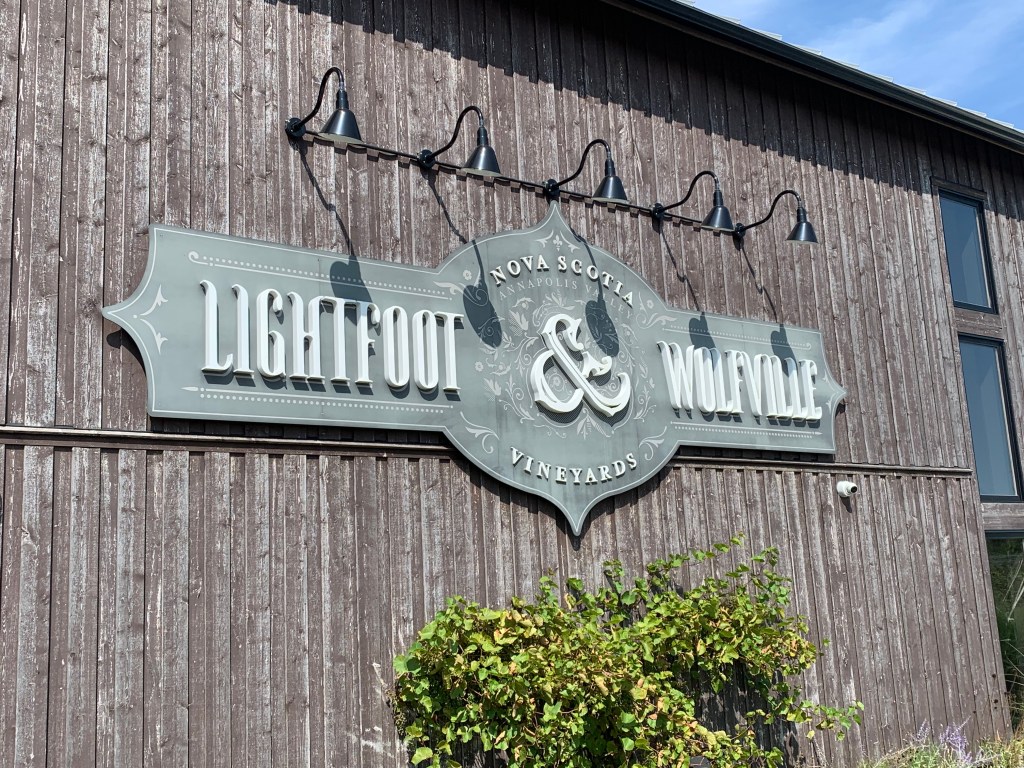
Grape growing and wine production might be fairly recent at Lightfoot & Wolfville, but the Lightfoot-sisters would be eighth-generations farmers in Nova Scotia and fourth-generation at their current home farm, explains Brand Manager Rachel Lightfoot.
Lightfoot & Wolfville has been working organic and biodynamic since their first plantings in 2009 and have been certified Organic since 2014 and Demeter-certified biodynamic since 2016 – a certification valid for both vineyards and cellar and wines are produced with minimal intervention.
Given the high malic content in the base wines, malolactic fermentation is increasingly applied at Lightfoot & Wolfville. The southern exposure is taken advantage of by growing later ripening varieties including Chenin Blanc, Gamay and since 2012 even a few hectares of Kékfrankos. I love that and I love them using Kékfrankos over Blaufränkisch or the prevailing synonym in places such as Fingers Lakes, which would be Lemberger. To me, it is a Hungarian grape and hence the Hungarian name seems appropriate to me.
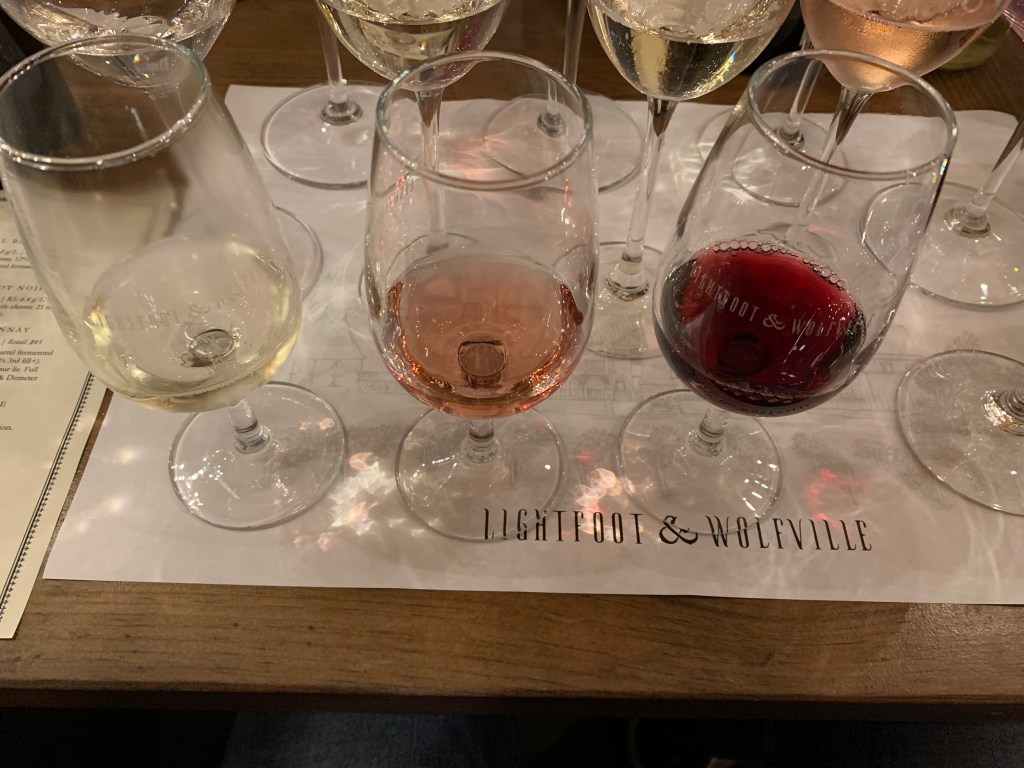
2019 Small Lot Sparkling Kékfrankos is a Blanc de Noirs from Kékfrankos grown in the cool 2019 vintage. Before the second fermentation the wine aged 8 months in neutral French barriques before spending 29 months on the lees. The result is a pleasing and easy-to-drink wine with fleshy, red fruit, some spice and detectable yeasty aromas to it.
2013 Blanc de Blancs Extra Brut LD is 100% Chardonnay from Lightfoot Home Farm Vineyard. The wine spent 4 years on the lees before being disgorged in 2018. Packed with ripe citrus as well as baked apple, slightly nutty, yeasty with noticeable pastry and a touch of yoghurt. Only 3,5 grams/liter and a lovely acidity. Give this one a go with e.g. a plate of oysters.
2016 Blanc de Noirs is produced from 100% Meunier grapes from the Oak Island Vineyard. The 59 months lees aging has provided the wine with lots of toast, pastry, sweet almonds and a touch a nougat as well a more red-fruited character like red currant and cherry.
2015 Blanc de Blancs from 100% Chardonnay, harvested in two ‘tries’ with 55% harvested on October 12 and 45% on October 26. The former had both primary fermentation and its partial malolactic fermentation taking place in neutral French barriques, whereas the latter had no malo and only aged for four months in oak.
The wine spent 68 months on its lees and opens predominantly autolytic with toast, nuts and pastry followed by seaweed, oyster, ripe apple and lemon, yeast and sourdough. 4 grams/liter.
To illustrate, just how small-scale production we are talking about, only 102 cases of 6 bottles were produced of this wine!
2018 Brut from 100% Chardonnay shows lovely toast, plenty of autolytics (dough and pastry), lemon merengue, pêche melba and peach melba yoghurt from going through full malolactic fermentation and spending 46 months on the lees. All of this adds richness to a wine that remains delightfully fresh even at 9 grams/liter.
This is a wine, which would pair beautifully with the lobster roll.
2014 Blanc de Blancs Extra Brut is 100% Chardonnay from a particularly low-cropping block of Lightfoot Home Farm Vineyard. The wine underwent partly malolactic fermentation and spent 2 months longer on the lees than the 2018. To this day super racy with loads of citrus and ripe apple. Toasty on the nose, yes, but the autolytics show more on the palate.
At Blomidon Estate Winery, on the shore of the Minas Basin, Simon Rafuse & team produces approx. 60,000 bottles annually, 15,000 of which are Tidal Bay and another 15,000 are sparkling wine, from roughly 40 hectares and Rafuse explains, how the tidal shifts at Bay of Fundy result in never-ending breezes at Blomidon Estate and these breezes provide frost protection at winter and reduces fungal pressure during the season.
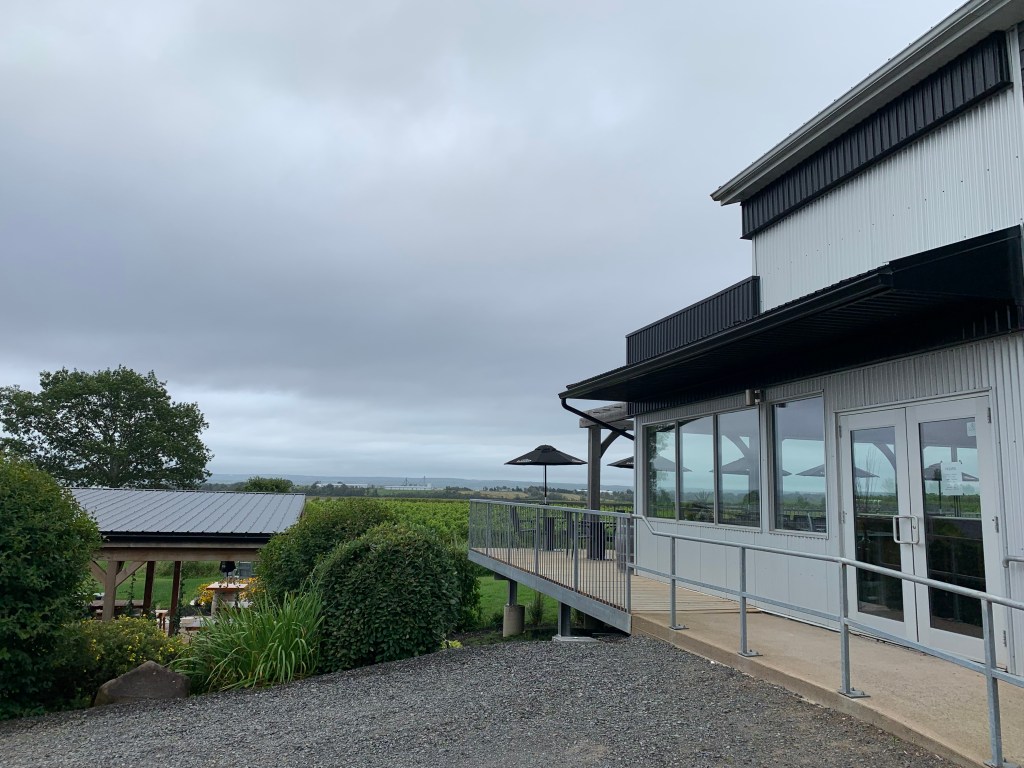
Blomidon Cuvée L’Acadie is made from 30-40% of reserve wine and was awarded 90 points from Decanter World Wine Awards in 2021. The wine shows apple, lemon and lime, hay and not too prominent autolytic notes – I get brioche.
Another wine, which goes lovely with Nova Scotia’s classic lobster roll.
2016 Brut Réserve from estate-grown Chardonnay grapes harvested at high-70’s Oechsle and disgorged in 2022 (7 grams/liter) was more obviously autolytic with notes of brioche, nuts, roasted almonds, pastry as well as yellow apple, lemon and a Maillard-like sensation. I love the salinity and very present acidity.
2011 Blanc de Blancs saw 10 years on the lees before being disgorged at 6 grams/liter in 2022. Bruised apple and bright caramel as well as dairy and cheesy aromas. On the palate it is super fresh. Saline underneath lots of green apple and tons of lemon all adds to a very dry sensation.
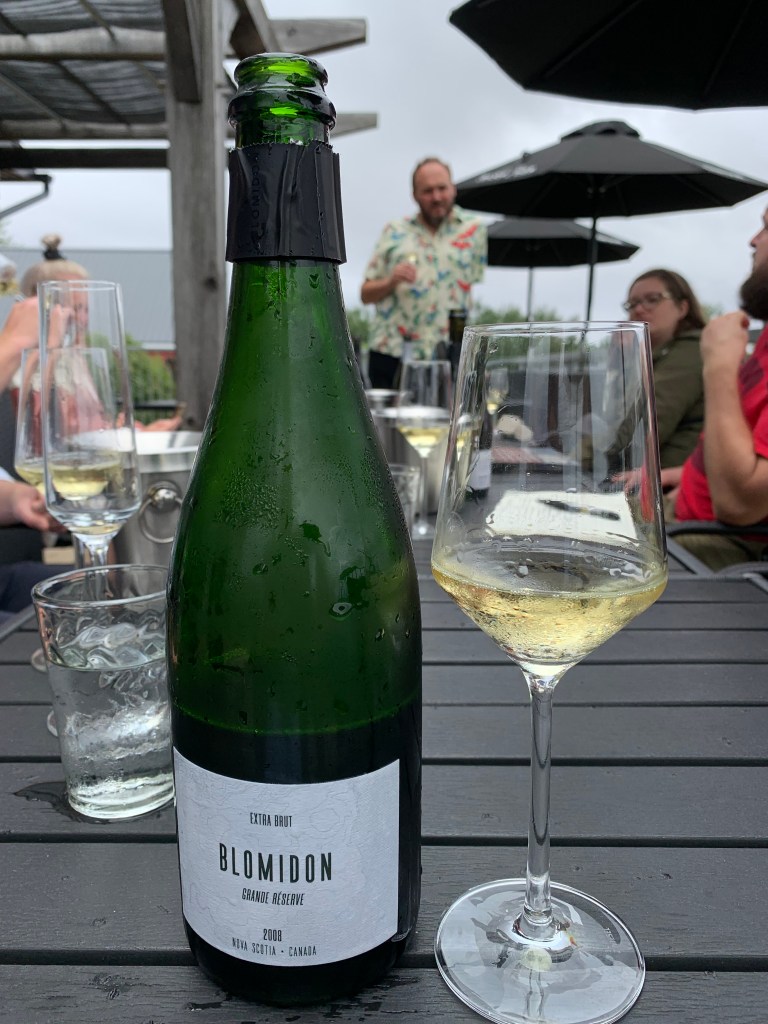
2008 Grande Réserve Extra Brut was highly complex. Autolytic and with obvious Maillard-notes. Explicitly nutty with roasted almonds and hazelnuts, apple pie/tarte tatin, crumble, bruised apple. Almost mushroom-like umami, mineral and saline. Full malolactic fermentation and only disgorged as late as 2022 and with only 4 grams of sugar per liter.
Luckett Vineyards is nested in the truly picturesque Gaspereau Valley.
Traditional Method NV from 100% L’Acadie Blanc is a blend of base wine from vintages 2012-2017 and in that, the wine is quite unique. The wine went through partial malolactic fermentation, it was made without any added dosage and spent 42 months on the lees.
The result is an incredibly fresh style. Green apple, lemon and grapefruit, honey and a touch of fennel. Even with the malolactic fermentation reducing the overall sense of acidity, the acidity is still very much present and plays very well together with a nice mineral touch.
We stay in Gaspereau Valley to visit Jean-Benoit Deslauriers at Benjamin Bridge. A lot of focus is put into Champagne’s traditional trio of Chardonnay, Pinot Noir and Meunier, but exciting wines are made from more winter hardy grapes, too.
The upper Gaspereau Valley is narrow, it is somewhat protected and positioned in a way, that the vineyards get significantly more sun. This is a perfect combination for Benjamin Bridge, since it optimizes heat collection, which really benefits the vineyards.
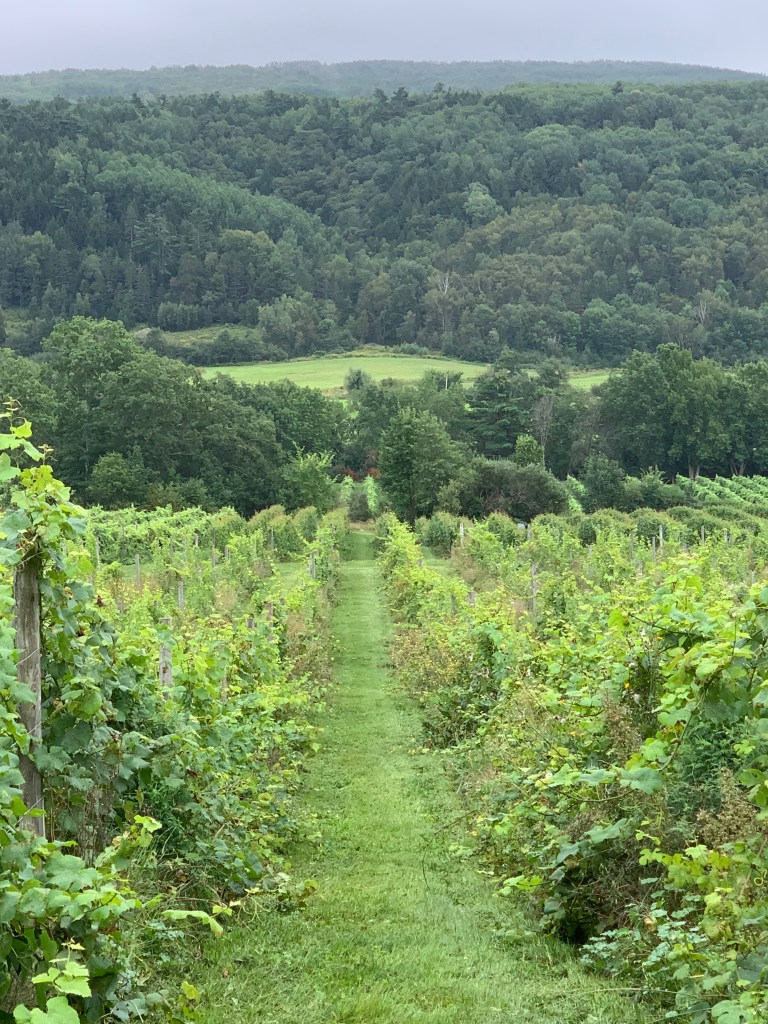
Dealauriers explains, how the phenolic ripeness in Sonoma during the second week of July is comparable that in Nova Scotia at harvest time during the last week of October. The result is obviously months more maturity in the grapes and simultaneously providing the final wines with that laser beam of acidity, which is typically found in traditional method wines in Nova Scotia.
Wine is often only at its very best, he continues, when you only acheive the potential optimal ripeness at the very last moment. I believe, he has a point, when asking for a better illustration of exactly that than growing grapes and producing wine in Nova Scotia.

Deslauriers never saw a reason not to pursue this and he explains how it makes perfect sense that a marginal and not at all classic microclimate such as Nova Scotia would not excel in the pursuit of too many different styles. Alas, the future of Nova Scotia should be focusing on those few styles that can be produced at a high level and those styles would include traditional method sparkling wines and crisp and fresh, aromatic whites such as Tidal Bay.
2018 Brut was disgorged in August 2023 at 4 grams/liter and is a Blanc de Blancs, 100% Chardonnay, which spent time in 600 litres oak barrels, inspired by Pascal Agrapart, the highly regarded Champagne producer.
The wine is both big and intense, but also it appears incredibly fresh with notes of ripe apple, tons of citrus as well as rye bread and sour dough.

2017 Blanc de Blancs has only 2-3 grams/liter of dosage and was disgorged comparatively sooner than the 2018 Brut, in 2021. A rich sparkling with toasty and nutty notes, ripe apple, ripe as well as candied lemon. Great complexity and length.
2016 Brut Nature was made without addition of SO2 and disgorged in 2021. It comes in a more oxidative style with more bruised apple character as well as toffee. This is a rich wine with a great structure and a wine that just goes on and on!
Learning from each other
As always, it would appear that new and older wine regions, younger and older generations etc. indeed have things to learn from each other.
Nova Scotia’s success story might show the way for European traditional method sparkling regions to modernize their wine production and project into the future.
They may currently be taboo, but hybrid grapes have played their part in saving European (Read: French) viticulture, before slowly being ruled out by INAO during the 1930’s.
Just one example: Fairly unknown is the fact, that Baco Noir used to be a common grape in the Champagne region, where it was used for the production of rosé. Today, Blomidon Estate Winery produces a nice Baco Noir.
Changes, though, are coming in Europe, too and more and more regions have started experiments with hybrid grapes and in response to climate change, the first plantings of Voltis, a hybrid cultivar, have already been authorised in Champagne.
The growing of hybrid grapes and the production of beautiful wines from these varieties has allowed Nova Scotia to create something truly unique.
These wines come with a genuine sense of place and at the same time Nova Scotia offers valuable insight to other regions, which already face or may face challenges of a similar character as a result of the climate change.
 LehmannLarsen.com
One thought on “Nova Scotia’s Sparkling Future”