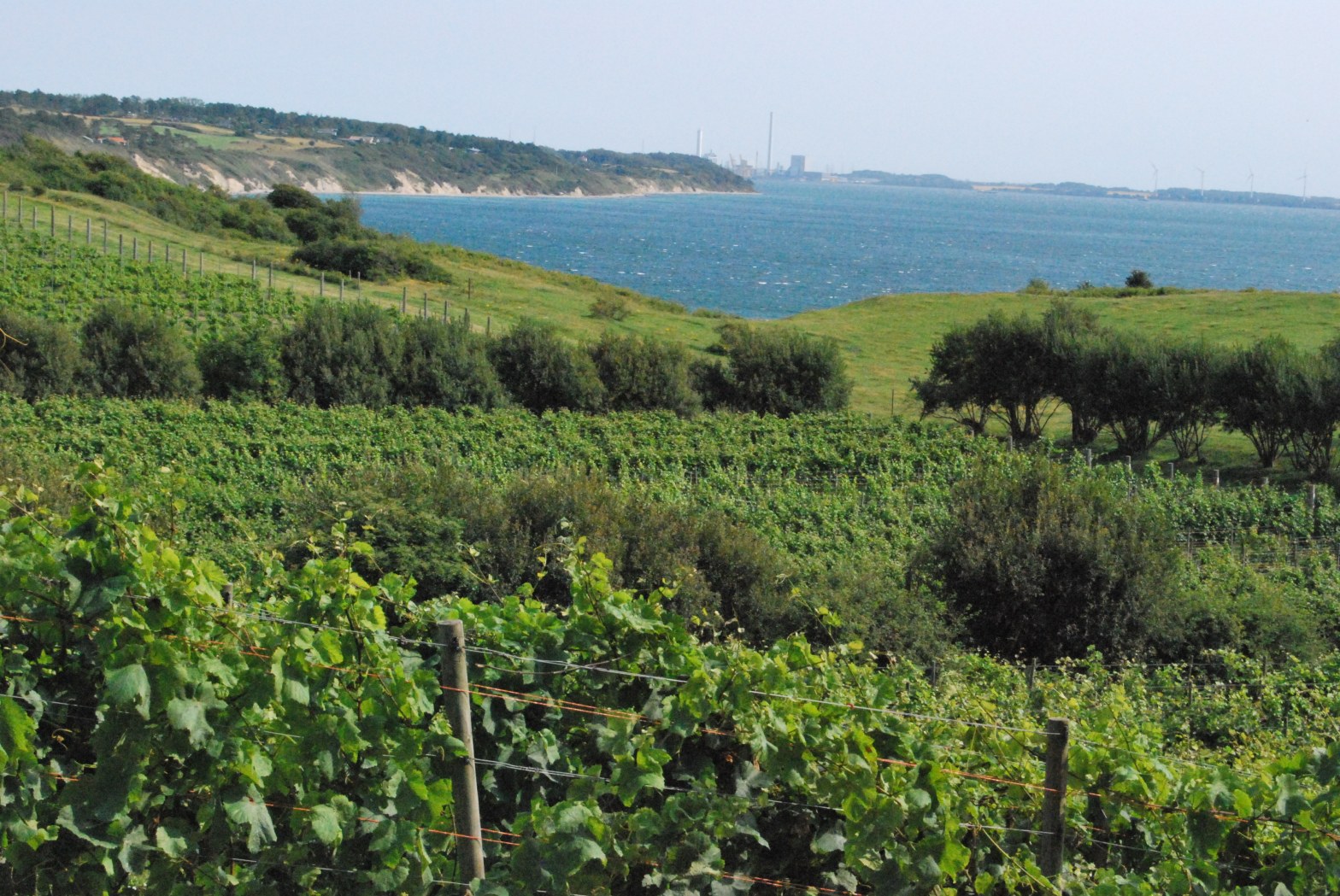
Not many people are aware that Denmark even produces wine and fewer yet know about Europe’s northern most PDO, which happens to be located in Denmark.
Yes, Denmark is very much a wine producing country.
At 56 degrees latitude, Denmark is located much farther north than any well-known wine region in the world and since, according to conventional knowledge, grapes require more than 1,000 Growing Degree Days to ripen (GDD), wine growing is impossible north of 51 degrees latitude.
Growing conditions in Denmark
If we take a brief look at historical data, they will show, that 1961-1990 have averaged some 600 GDD and 1991-2020 roughly 700 GDD.
These numbers obviously imply, that the climate in Denmark is more than marginal for wine growing, even if the annual GDD is increasing.
With the ongoing climate changes, that is slowly going to change.
Also, such number vary significantly, even within a very small country such as Denmark, due to a vast coastal line, weather systems coming in from the west as well as the warming effect of the Gulf Stream. The Gulf Stream moderates the climate and most significantly so in those central coastal areas, which also experience larger amounts of sunshine hours warming up the surrounding bodies of water.
And the single most important reason, why winemaking is currentlyat all possible in Denmark, is the long days that you get during the growing season this far north. An example could be 2023 when the sun rose at around 6:30 AM and set at just before 8:00 PM on April 1st and on September 15th it rose at approx. 6:40 AM to set only at 7:30 PM. Those are long hours of potential sunshine and absolutely crucial, if any grapes are to be grown and any wine to be made.
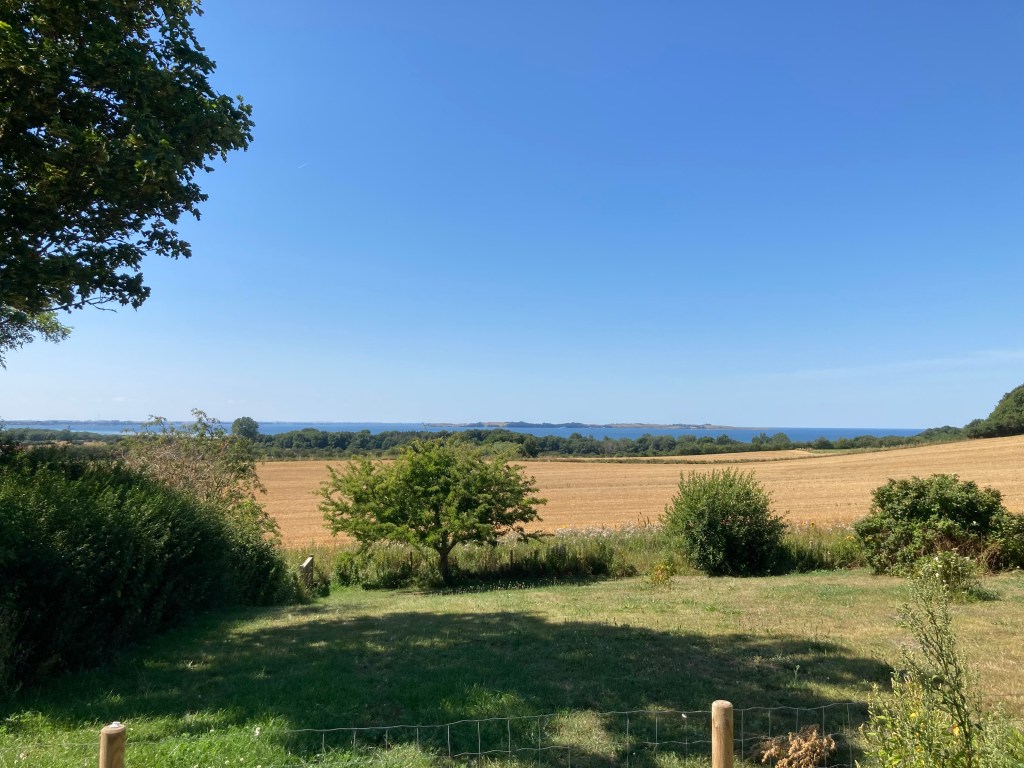
This is exemplified in 2022, which saw an average of 850-900 GDD in the more superior wine growing areas compared to a mere 550-600 in the coldest, most windy parts of the country. Take into consideration, that 2022 – and still with no more than roughly 1,400 hours of sunshine during the growing season – was by and large ‘the warmest year we ever experienced, yet it is expected to be one of the coldest of the rest of our life!’
That sentence in itself provides food for thoughts!
Rainfall – or rather the timing of rainfall
The over-all norm in Denmark is around 800 mm a year, which is not all that much compared to other wine growing regions such as Galicia or even Bordeaux.
If only a higher percentage of those 800 mm would be guaranteed to fall during winter and early spring, but rainfall in the most varied quantities and with most varied intensity is experienced throughout the growing season, too. July, as an example, may be completely dry as in 2018 or soaking wet as experienced in 2023.
Not seldomly, wine growers will have to deal with significant amounts of rain during September and October, which could potentially dilute the grapes or even hinder the final ripening of the grapes – or it could impact the timing of harvesting in a less favourable direction.
Defying expectations, though, Denmark’s history as an official winemaking country under EU law dates back to the turn of the Millenium, with a history, that obviously goes beyond that.
Denmark consists of 4 PGI’s for wine production:
Regional Wine Jutland
Regional Wine Funen
Regional Wine Zealand
Regional Wine Bornholm
Alas, wine growing and wine production in Denmark is spread out more than one would expect, but there is a concentration of producers in the areas near bodies of water such as Storebælt and Lillebælt. Such areas would include Røsnæs, Odsherred, both in Northwestern Zealand, Southwestern Zealand, Eastern Funen and Eastern Jutland. These are all areas with above average temperatures, average/above average hours of sunshine and below average precipitation. All of this combined with a moderating effect from the fairly narrow belts, which heat up more rapidly than, say, Skagerak or Kattegat.
Røsnæs, the northernmost of part of the beak shaping Kalundborg Fjord, was expected by many to become the first Danish PDO due substantially more sunshine and substantially less rainfall than the country average.
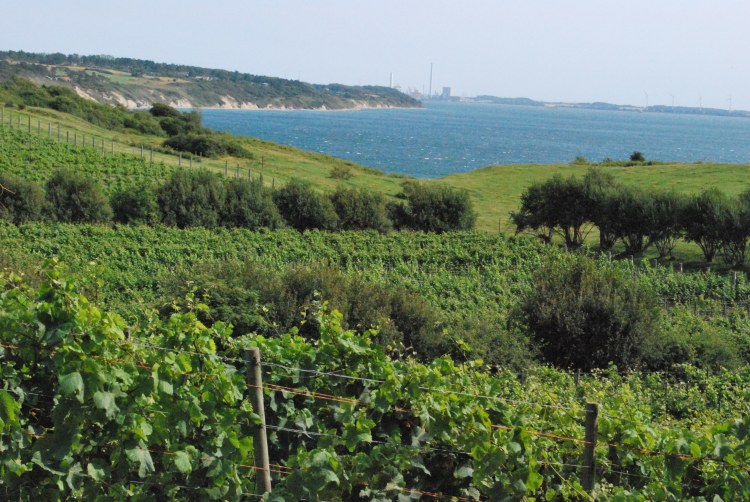
Weather systems come in from the Nordic Sea, often bringing strong winds, further lowering temperatures, as well as more rainfall, than wine growers would like. The levels of precipitation of course keep sunshine hours down to a level, where wine growing is much more troublesome. That is the obvious reason, why we don’t see much wine growing in the central and western parts of Jutland.
Modest temperatures and an over-all rather humid climate in Denmark make wine growing challenging, with both powdery and downey mildew as well as grey rot being severe challenges in the vineyards. And this on top of actually getting the grapes to ripen adequately.
This means, that growing classic Vitis vinifera varieties is not an option, so growers rely on PIWI grapes such as Rondo, Bolero and Regent for black varieties and Solaris, Souvignier Gris and Muscaris for green ones, just to give a few examples.
These varieties are bred to adapt to the marginal climate of Denmark and other countries. Two joint traits are, that they simple ripen faster and are less susceptible to fungal diseases in the vineyards.
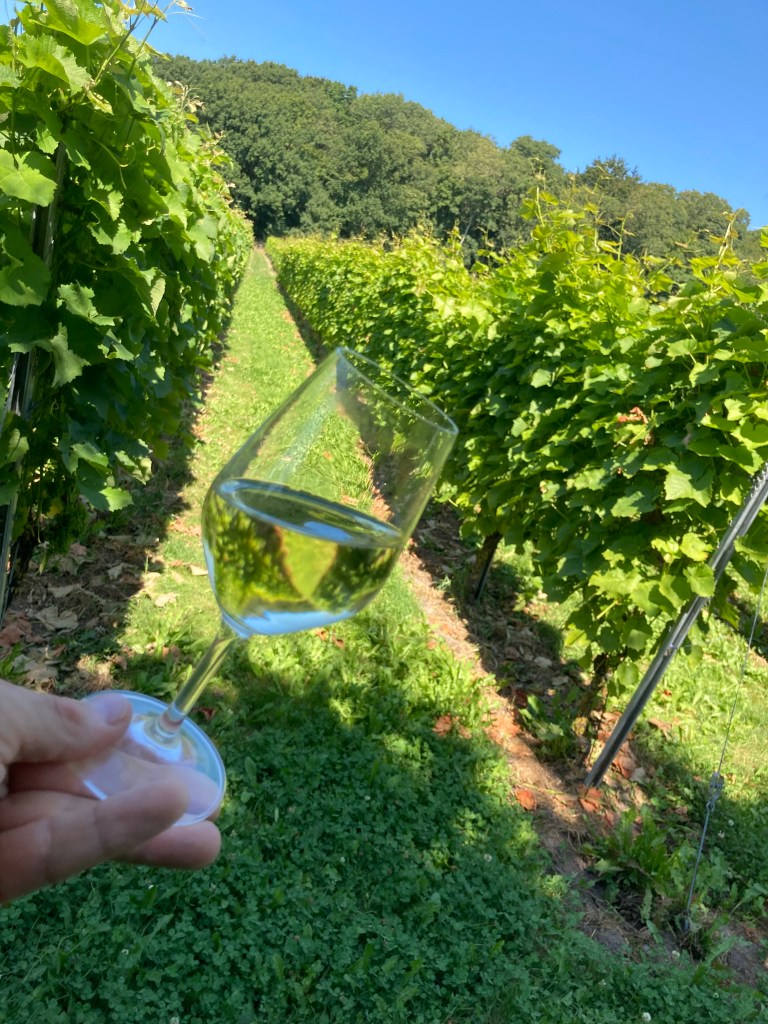
Factoring in unpredictability
Another climatic factor and one that will continue to increasingly impact Danish viticulture is the utter unpredictability of the weather!
This phenomenon and its consequences, Danes experienced just a few weeks back.
Floodings caused by westerly winds causing extremely high water-levels on westerly shores are nothing new to Denmark. Only, this time around, winds and the occurring floodings came from the east, which is absolutely unseen and consequently, havoc was caused in completely different areas than normally. And that is future!
More and more areas – and new ones – will experience and suffer from extreme weather.
In general, we will have to get used to the fact, that with the climate changes we will experience over-all increasing temperatures as well as extremes becoming ever more extreme.
Hot summers will get increasingly more hot and dry ones increasingly more so. A wet season will become even wetter and in case of droughts, it will become more severe.
Add to this the risk of a combination of even earlier bud break combined with a risk of later spring frosts, potential summer hail storms or torrential rain and floodings around harvest time.
None of us know, just what the weather gods have up their sleeves for us, but for grape growers to navigate, it will become increasingly more difficult. And that applies to so many other, much more classic, wine countries than Denmark, too.
Extending the reign of the PIWI grapes
For any foreseeable future, my advice to Danish wine producers would be sticking with your guns. Continuing to optimize and perfect making dry, crisp whites from Solaris & Friends seems the way to go – along with production of traditional method sparkling wines.
For producers insisting on producing reds in Denmark, look at Sune Albertsen at Njord. Beautiful Pinot Précoce, planted only at the most favorable plots in the vineyard, is produced in the absolute center of Zealand. And such meticulous site selection is crucial, as you need optimal sun exposure to ripen Pinot Précoce this far north! Anyway, this is a glimpse of, what Danish red could and should be in mid-range future! Incredible elegant and fragrant, yet complex reds.
Maybe there is hope, too, for varieties such as Maréchal Foch. I remember tasting some pretty beautiful 1999 and 2001 Maréchal Foch in Nova Scotia this September and Nova Scotia is in a pretty marginal climate, too!
Well, there are more reasons than one, why to stick to the PIWI grapes in a foreseeable future.
Research continues to show, that even if Solaris etc. were bred to cope with a marginal climate, they may be a more generally viable solution in a wine world with ongoing and escalating climate changes.
In Champagne, the hybrid variety of Voltis has been approved (no more than 5% of a grower’s vineyards) and in Trentino, Solaris and Souvignier Gris are amongst the varieties selected for the Vevir project to “test for productivity, disease tolerance and oenological potential” – www.civitadelbere.com
With all of the research done in Champagne, Bordeaux, Languedoc, Rhône, Trentino, Emilia-Romagna as well as overseas, so much knowledge will be available, which Danish wine growers can use to continue to produce better and better wines in the next decades.
Competing against other countries’ PIWI varieties, Danish wines do remarkably well.
Earlier this year, Dyrehøj Vingård – the biggest wine producer in Denmark – and Skærsøgaard could report of more than solid harvests from PIWI Wine Awards International 2023.
Both logged a total of 7 medals out of 23 medals awarded to Danish wines in total.
Dyrehøj achieved no less than 6 Gold medals and 1 Silver with ratings going as high as 95 points. At the same competition, fellow Røsnæs located winery, STUB Vingård, brought home a Gold medal for 2021 STUB Sparkling Stallion – Johanitter and Skærsøgaard received no less than 96 points and a Grand Gold medal for the 2020 Skærsøgaard DONS Blanc de Noir Brut amongst their 7 medals.
A sparkling future
The future for Danish wine might indeed very well be sparkling – in more ways than one.
Fact is, that if we have anything aplenty in grapes grown in Denmark, that would be acidity and if growers succeed in getting the fruit aromas and flavours just ripe, they have everything that traditional method sparkling wine producers could ever ask for!
Champagne was perfectly positioned to make premium quality traditional method sparkling wines already more than a century ago. There are quite a few reasons for their success, including first class grape varieties, but a very important reason is the region being located in a cool climate wine growing area in terms of the classic, international varieties. Pinot Noir and Chardonnay are in a perfect location to ripen sufficiently to produce sparkling wines, whereas Champagne is considered too cold for the grapes to produce still wines. At least for now!
Danish wine producers have become increasingly aware, that we actually have very good conditions to produce traditional method sparkling wines of a very good quality, and in 2018, the northern most PDO in all of Europe, Dons PDO, which is located north of Kolding in East Jutland, was a reality!
Dons is a PDO for sparkling wines only and obviously the wines have to meet strict criteria just as in any other PDO and for Dons, a defining parameter is a particular bright, Nordic acid profile as to demonstrate its northern origin.
Also, obviously, Dons PDO sparklings have to be produced from particular varieties. With the EU approval of the production of wines from PIWI grapes such as Cabernet Cortis, Orion, Regent, Rondo and Solaris, Danish wine might have played an, even if ever so little, role in making grape growing in Europe a little bit greener and more sustainable for decades to come. At least I like to think so.
Skærsøgaard, the sole producer under the Dons appellation, fought for a long time for this recognition and continues to lead the way for Danish sparkling wines and the PDO wines of Skærsøgaard were very well received with high 80’s handed out by The Wine Advocate for the first two wines of the PDO to be reviewed by the magazine.
To me, white wines from PIWI varieties and sparkling wines would be Danish wine playing to its own strengths!
 LehmannLarsen.com